Journal · 28/07/2026
Should you dilute whisky with water?
A few measured drops can change aroma and texture. The useful question is not whether water is allowed, but what it reveals in this particular glass.
Central premise
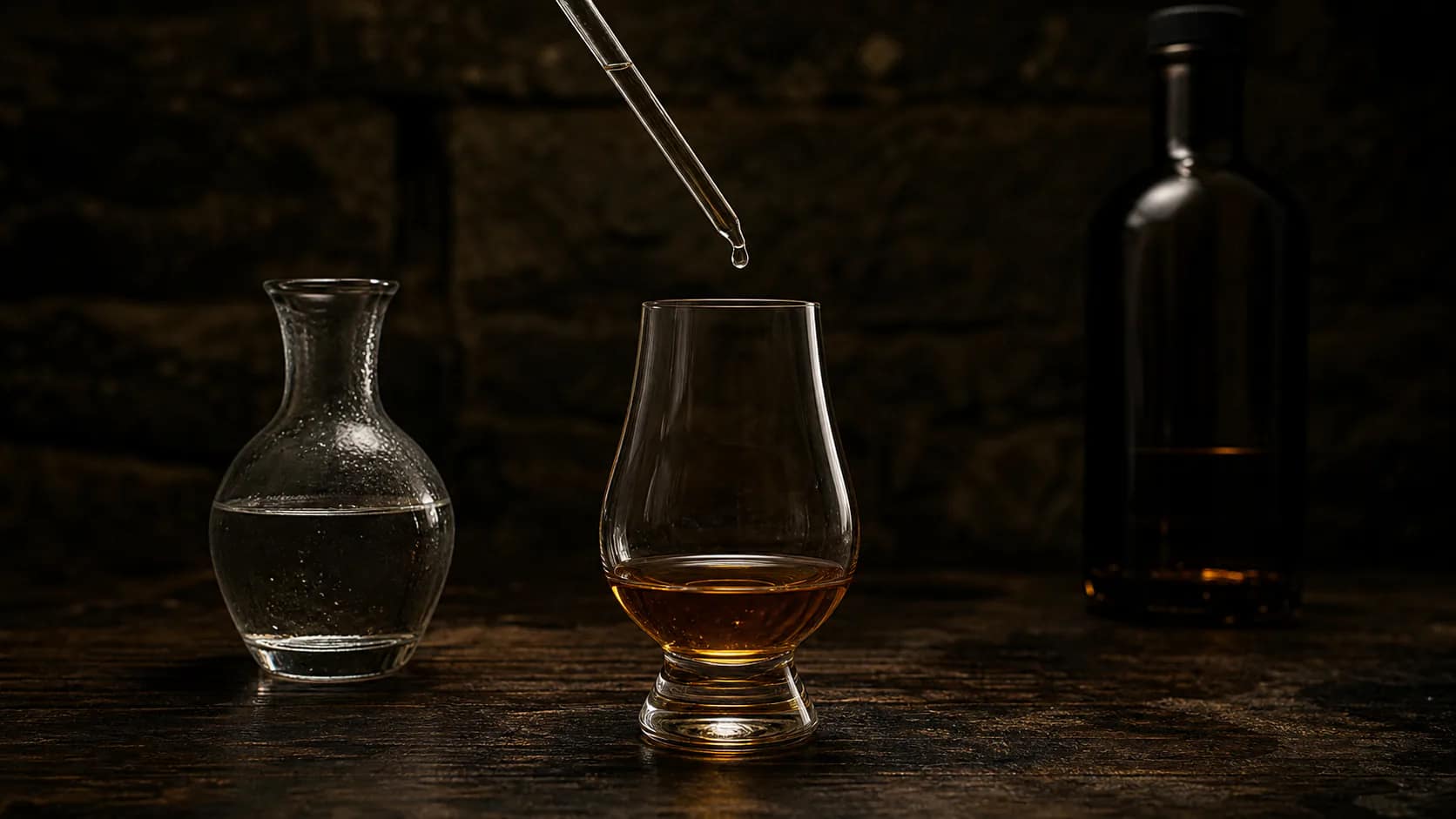
Ordering whisky neat can look authoritative, but appearance is a poor reason to refuse water. A small, deliberate dilution can make some aromas easier to perceive, soften alcoholic heat and expose a whisky's structure.
It is not a rule, and it is not an admission that the whisky is too strong. It is a reversible tasting experiment: smell and taste first, add a little water, then compare.

The chemistry
Guaiacol helps explain the change.
Guaiacol is one of the amphipathic flavour compounds associated with smoky whisky. A 2017 molecular-dynamics study found that its relationship with ethanol and the liquid-air interface changes as whisky is diluted.
In the study's model, moving from about 45% to 27% alcohol made guaiacol more likely to contribute at the surface and potentially to aroma. That is evidence for why dilution can alter perception; it is not an instruction to reduce every dram to 27%, and it does not mean every whisky is dominated by guaiacol.
The method
Begin with the whisky as bottled.
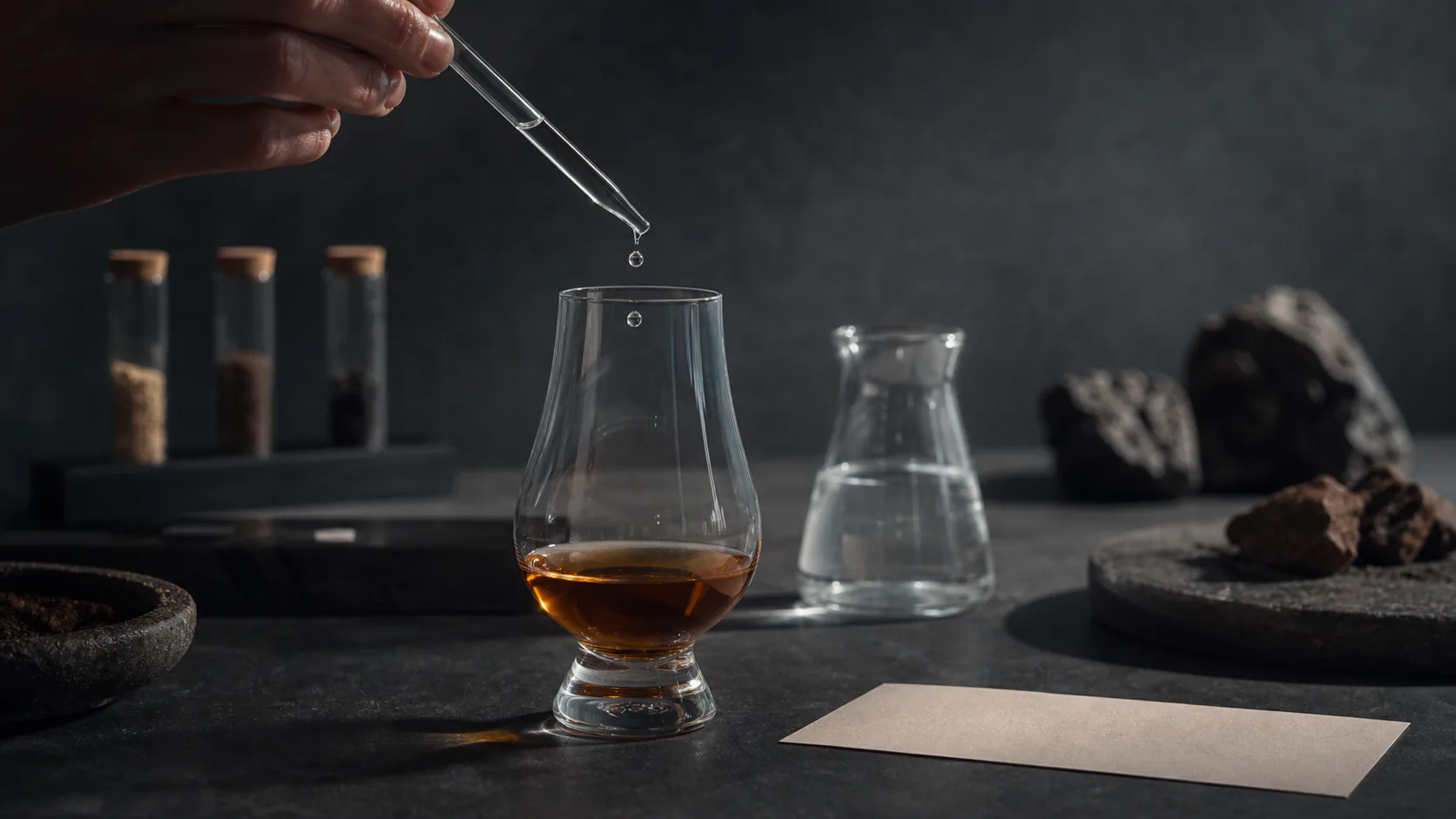
Pour a modest measure into a clean tulip-shaped glass. Let it settle, nose without burying your face in the rim, and take a small first sip. This establishes the undiluted reference.
Add two or three drops of still, neutral water, swirl gently and wait. Nose and taste again. If the whisky opens rather than thins, repeat once. Cask-strength whisky often accepts more water, but the useful dose is found by comparison, not by formula.
Temperature
Water and ice do different jobs.
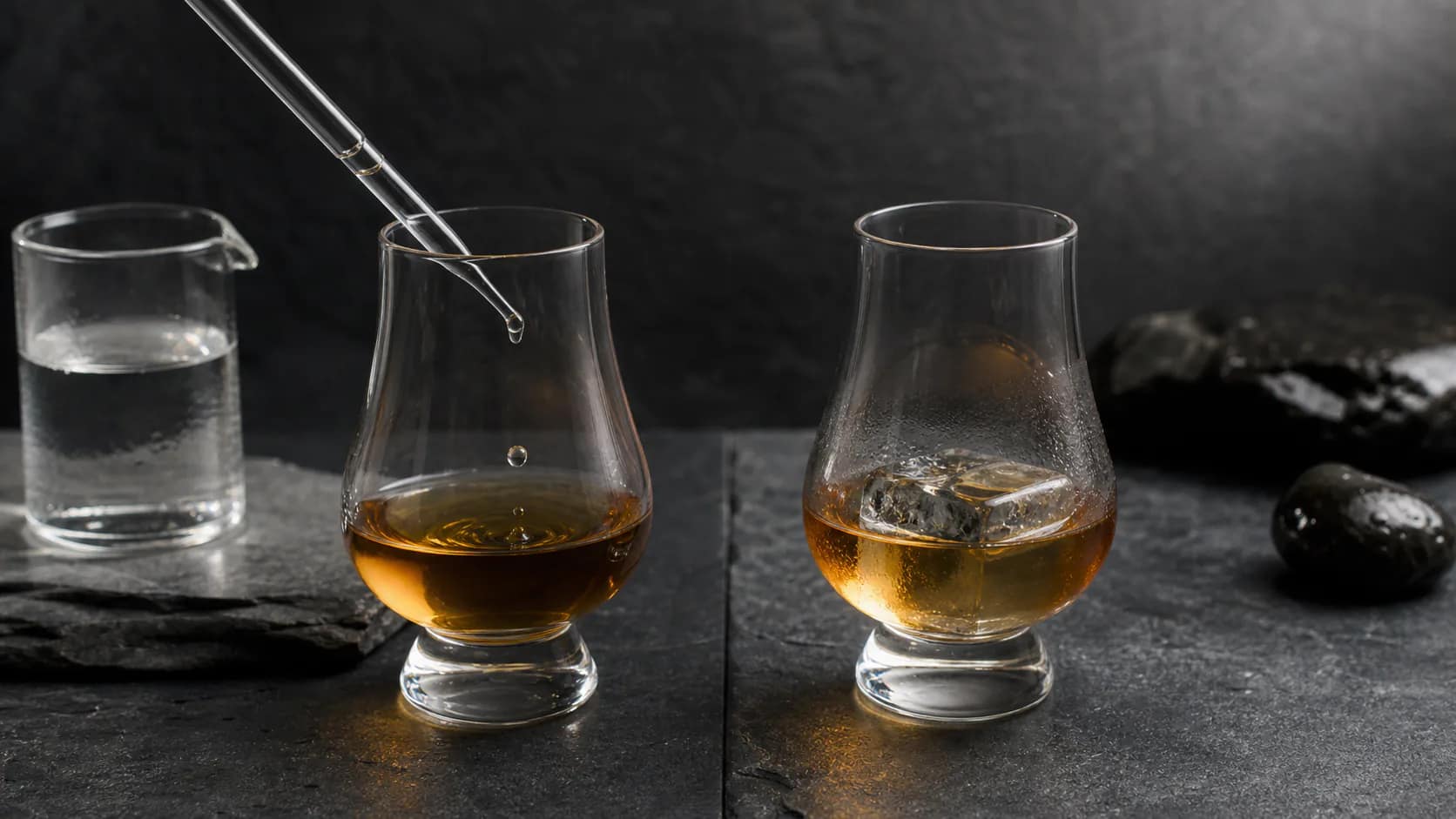
A measured pipette or teaspoon changes strength while keeping temperature comparatively stable. Ice both dilutes and chills, and lower temperature can suppress volatile aromas even as melting water softens the alcohol.
There is nothing improper about ice when refreshment is the aim. For analysis, room-temperature water gives more control; for relaxed drinking, the preferred serve belongs to the drinker.

The limit
Open the whisky; do not wash it away.
The same dilution that releases one aroma can reduce concentration, texture and finish. Delicate low-strength whisky may lose definition quickly, while a dense high-strength malt can remain coherent through several additions.
Keep the additions small enough that each change can be observed. If the glass becomes flatter, the useful threshold has passed; the next pour can simply remain neat.