Journal · 28/07/2026
What do single malt, single grain and blend actually mean?
Scotch labels describe how whisky was made and combined. The word single identifies one distillery—not one cask, one batch or one grain.
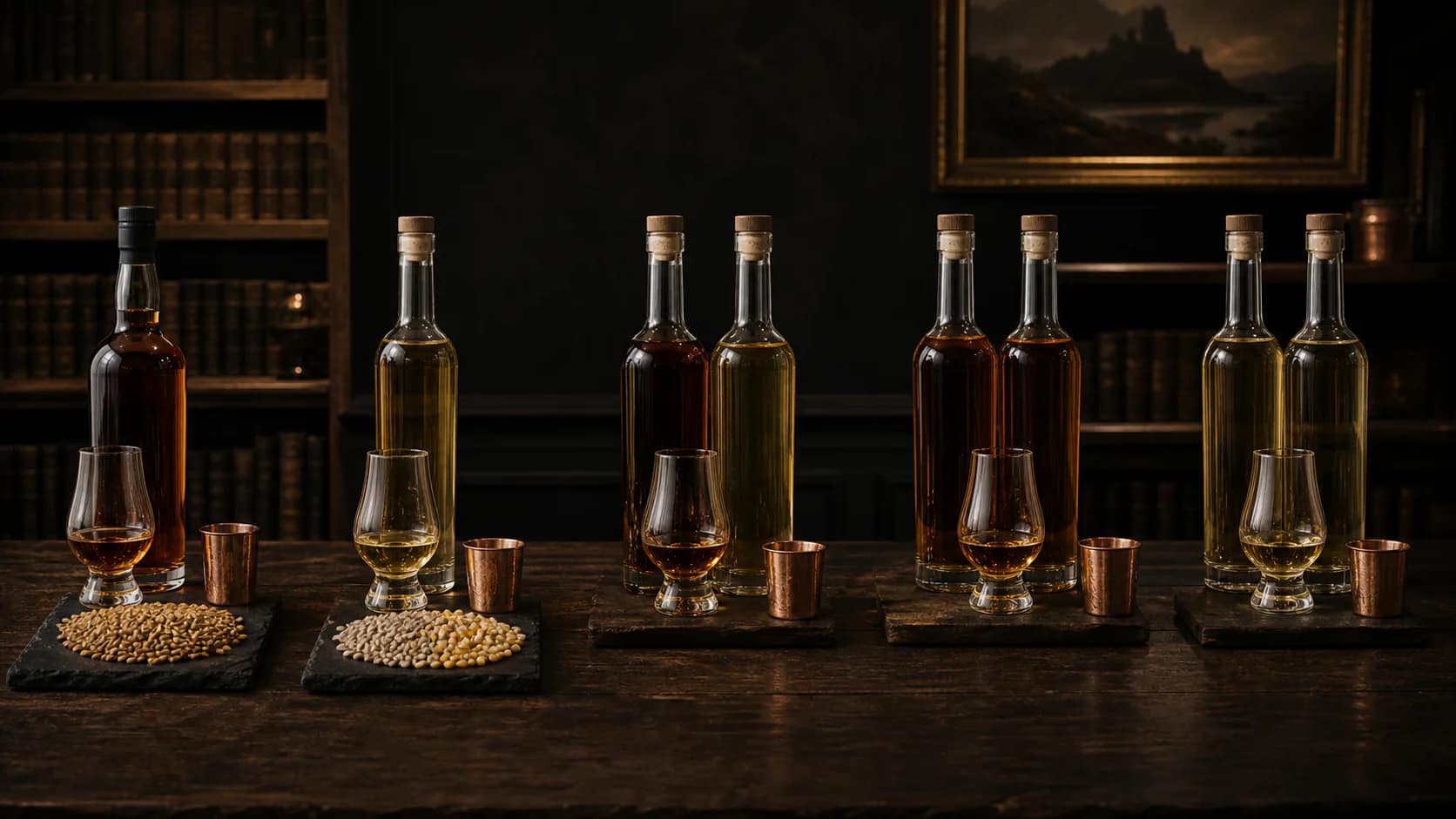
Central premise
The Scotch Whisky Regulations define five categories: Single Malt, Single Grain, Blended Malt, Blended Grain and Blended Scotch Whisky. They are production definitions, not a quality ladder.
The most useful first lesson is that single means a single distillery. A single malt can contain whisky from many casks and many years, provided every drop was distilled at the same distillery and the legal age statement refers to the youngest component.
Category 01
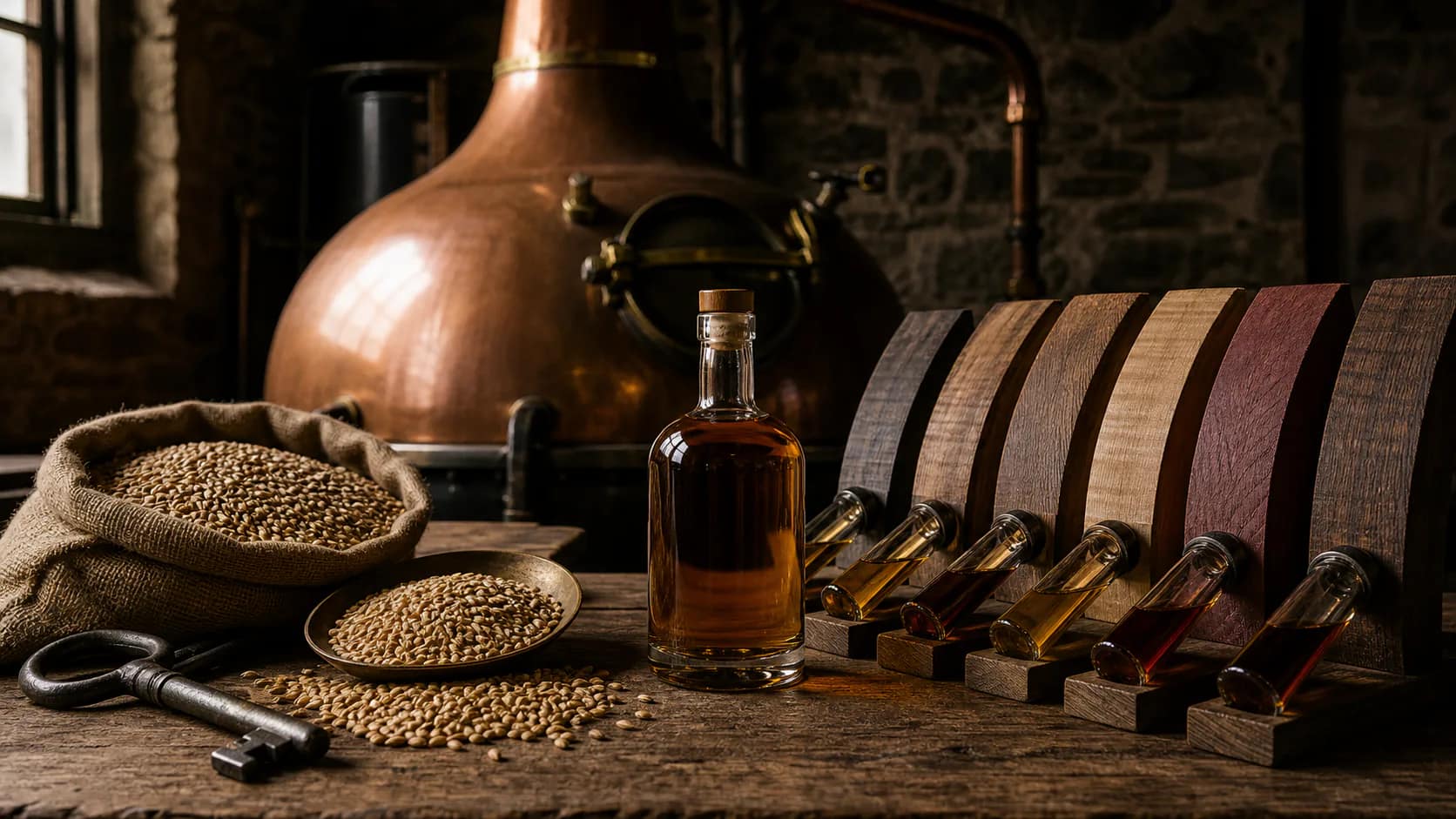
Single Malt Scotch Whisky.
Single malt is mashed, fermented and distilled at one distillery from water and malted barley without other cereals. It is batch-distilled in copper pot stills and must be bottled in Scotland.
It may be a marriage of dozens or thousands of casks. Unless the label also says single cask, cask number or an equivalent declaration, single malt should never be read as one barrel.
Category 02
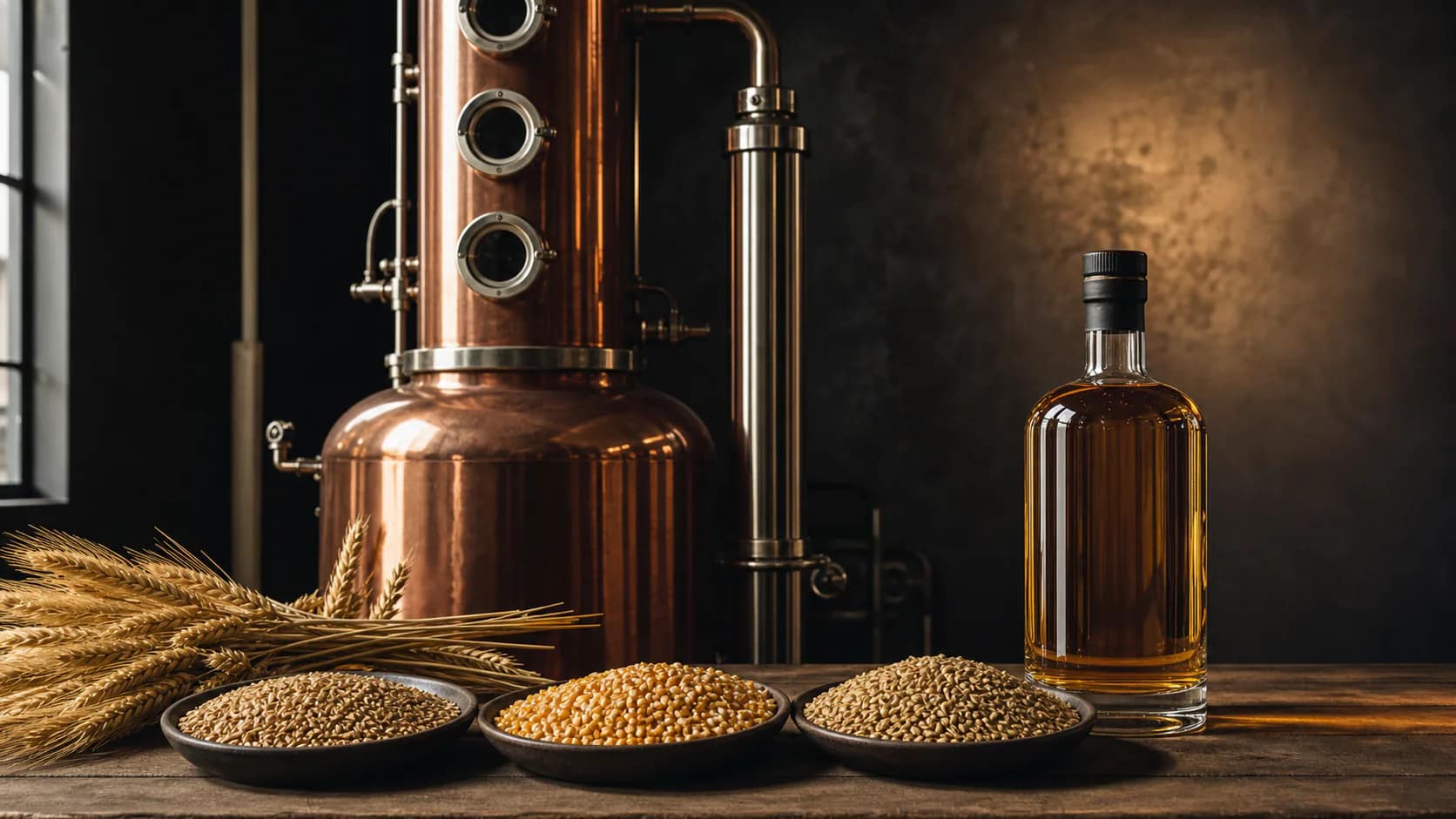
Single Grain Scotch Whisky.
Single grain is also the product of one distillery, but its mash may include whole grains of other malted or unmalted cereals alongside water and malted barley. It does not meet the narrower single-malt definition.
Most grain Scotch is produced efficiently in continuous stills and supplies elegance, sweetness and structure to blends. Grain does not mean one grain, and it does not mean neutral or inferior.
Category 03
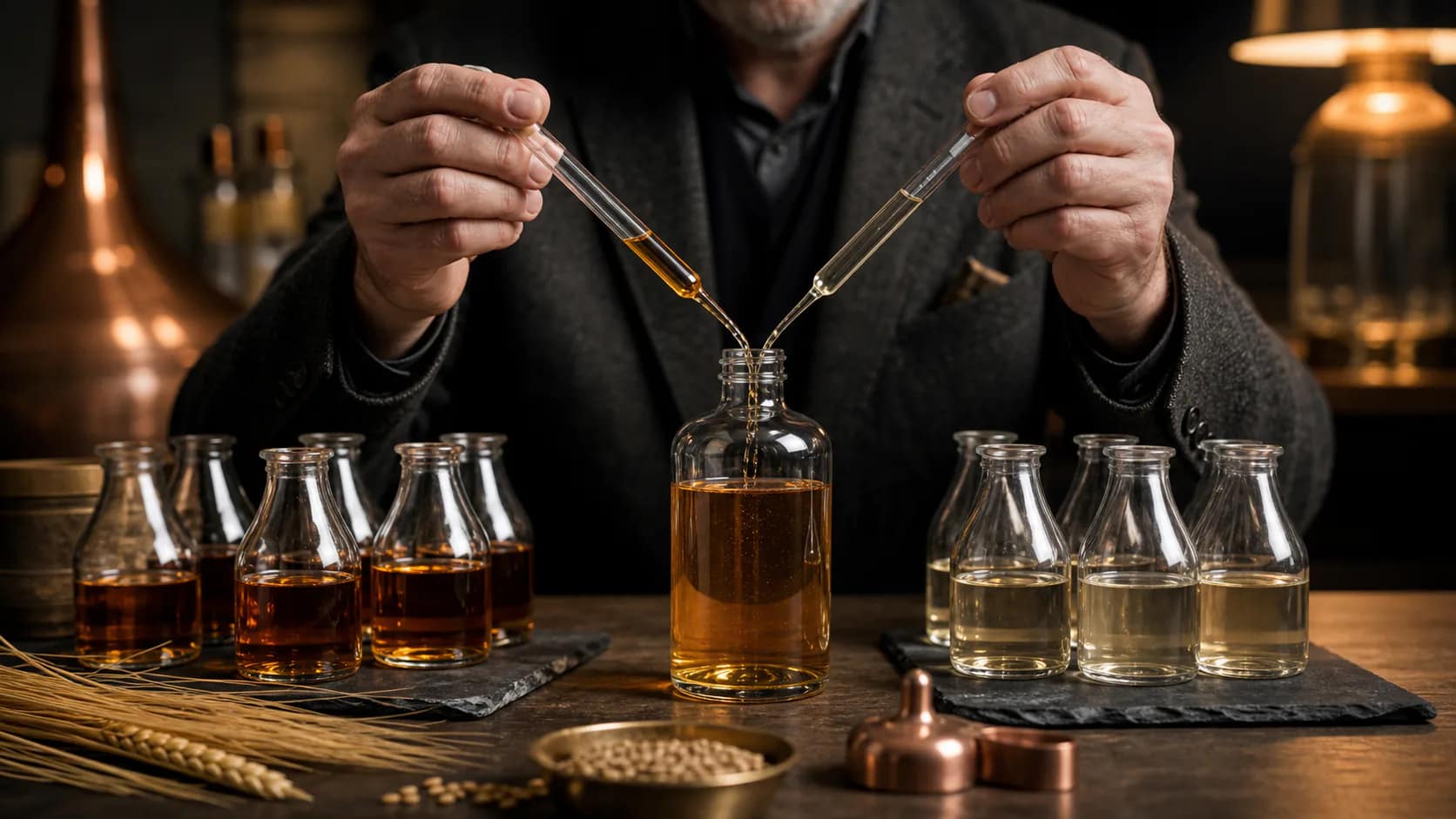
Blended Scotch Whisky.
A Blended Scotch combines one or more Single Malt Scotch Whiskies with one or more Single Grain Scotch Whiskies. The blender uses different distillery characters as ingredients in a repeatable house style.
This is the category behind most Scotch sold worldwide. Its aim is often consistency across very large volumes, but the best blends can be as deliberate and complex as any single malt.

Categories 04 and 05
Blended malt and blended grain.
Blended Malt Scotch Whisky combines single malts from more than one distillery and contains no grain whisky. Blended Grain Scotch Whisky combines single grains from more than one distillery.
Older wording such as vatted malt may still appear in conversation, but blended malt is the current legal category. Neither term tells you the number of casks, maturation quality or flavour intensity.
At the shelf
Read category before reputation.
Start with the exact legal category, then look for age, alcoholic strength, region, cask information and bottler. An age statement always describes the youngest whisky in the bottle.
Category tells you the production architecture. It cannot tell you whether the whisky is delicious, good value or suited to your palate; those questions still require evidence and tasting.