Journal · 28/07/2026
What is Angel's Share?
The Angel's Share is the whisky lost from a cask while it matures—a small annual disappearance with large consequences for strength, scarcity and price.
Central premise
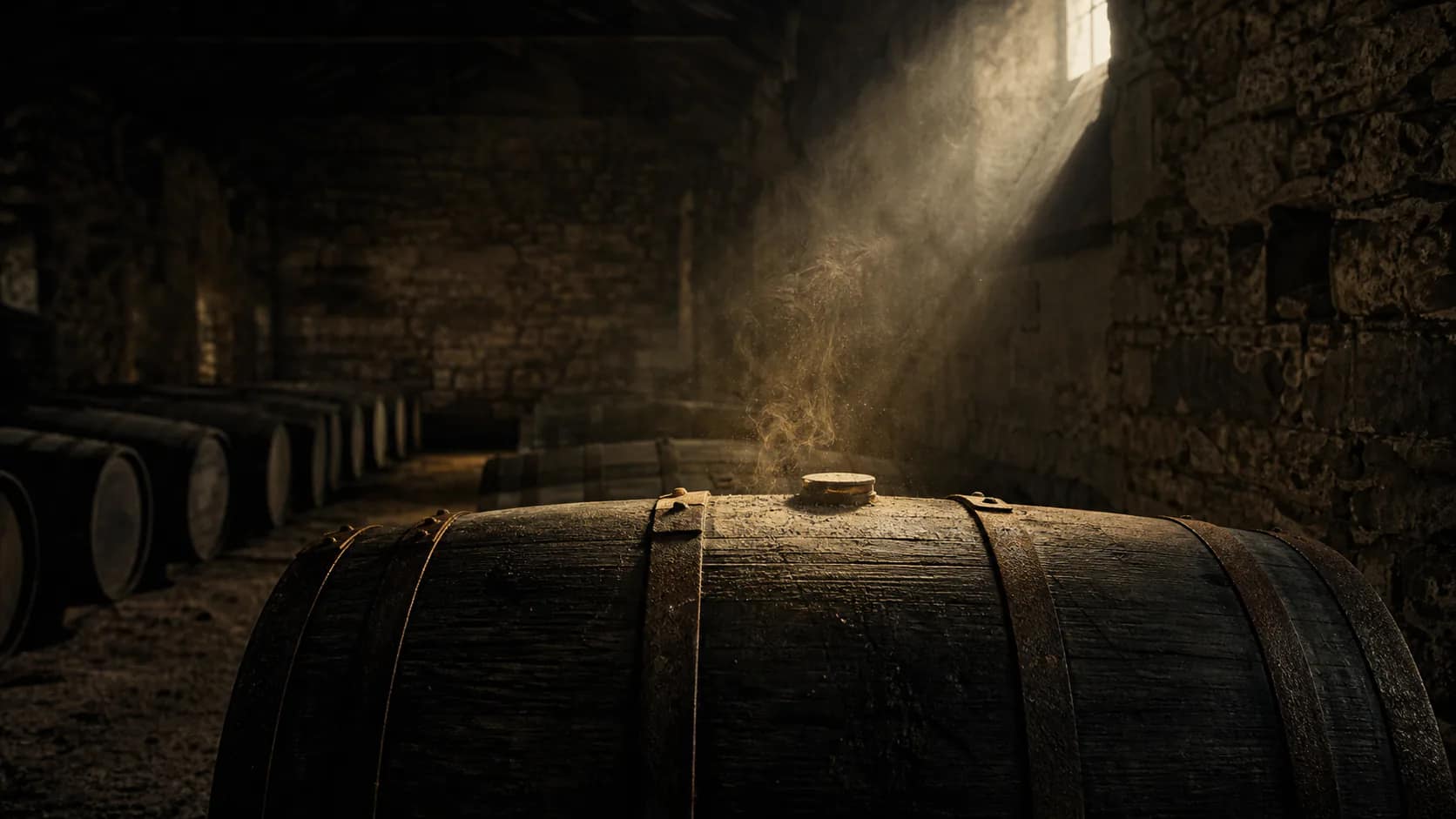
A whisky cask is not a sealed time capsule. Oak is porous, warehouses breathe, and a small proportion of spirit escapes into the air during maturation. Distillers gave that loss an elegant name: the Angel's Share.
Around two per cent of a cask's contents may be lost in a year, but that figure is an industry shorthand rather than a universal constant. Every cask and warehouse follows its own curve.
Evaporation
Both water and alcohol can escape.
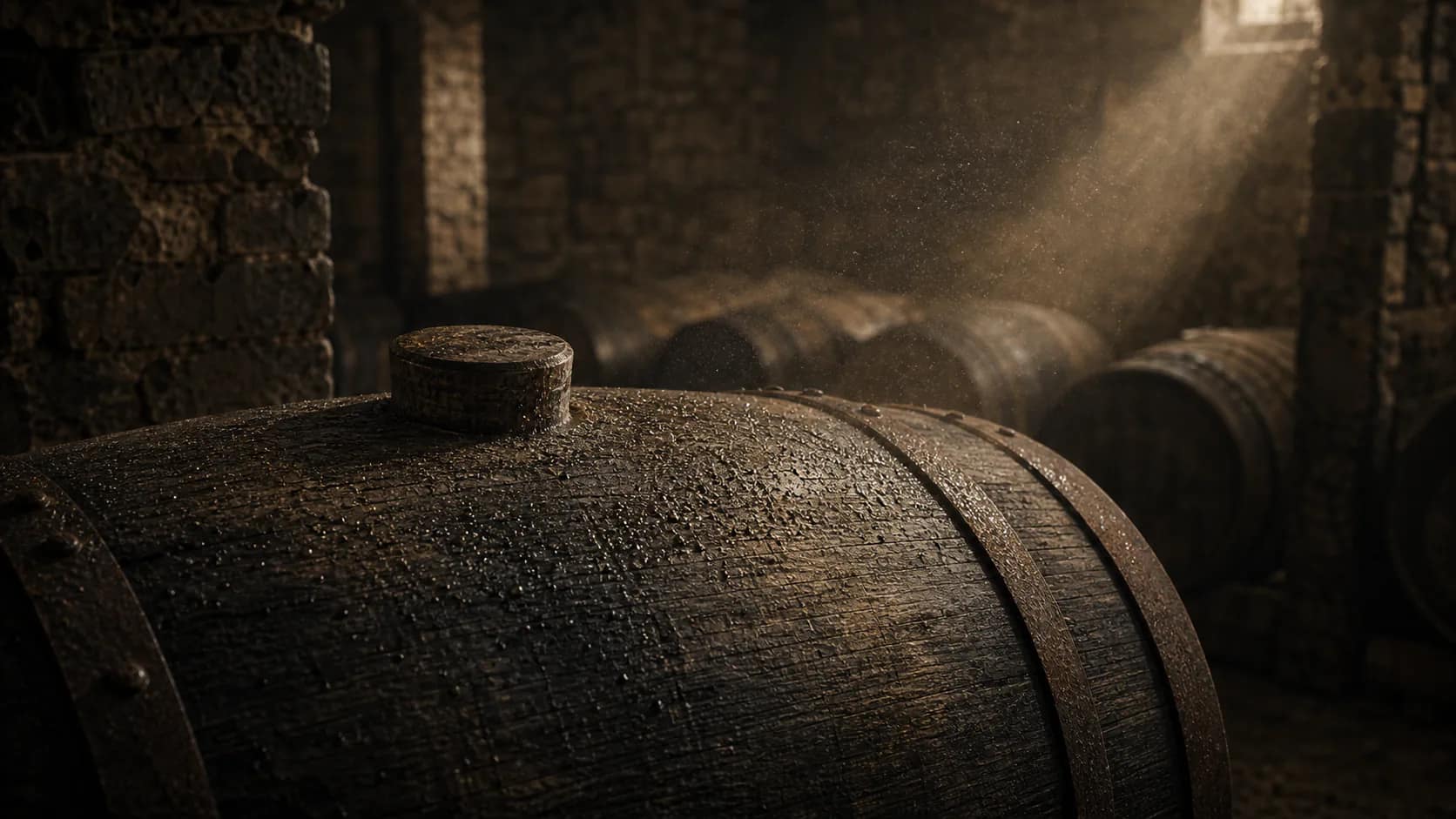
The lost volume is a mixture of alcohol, water and volatile compounds. Temperature, humidity and air movement influence which components leave faster, so evaporation can alter alcoholic strength as well as the number of litres remaining.
In Scotland's cool, relatively humid maturation climate, strength often falls gradually, although an individual cask can behave differently. That is why warehouse teams measure rather than assume.
The variables
No two casks breathe alike.
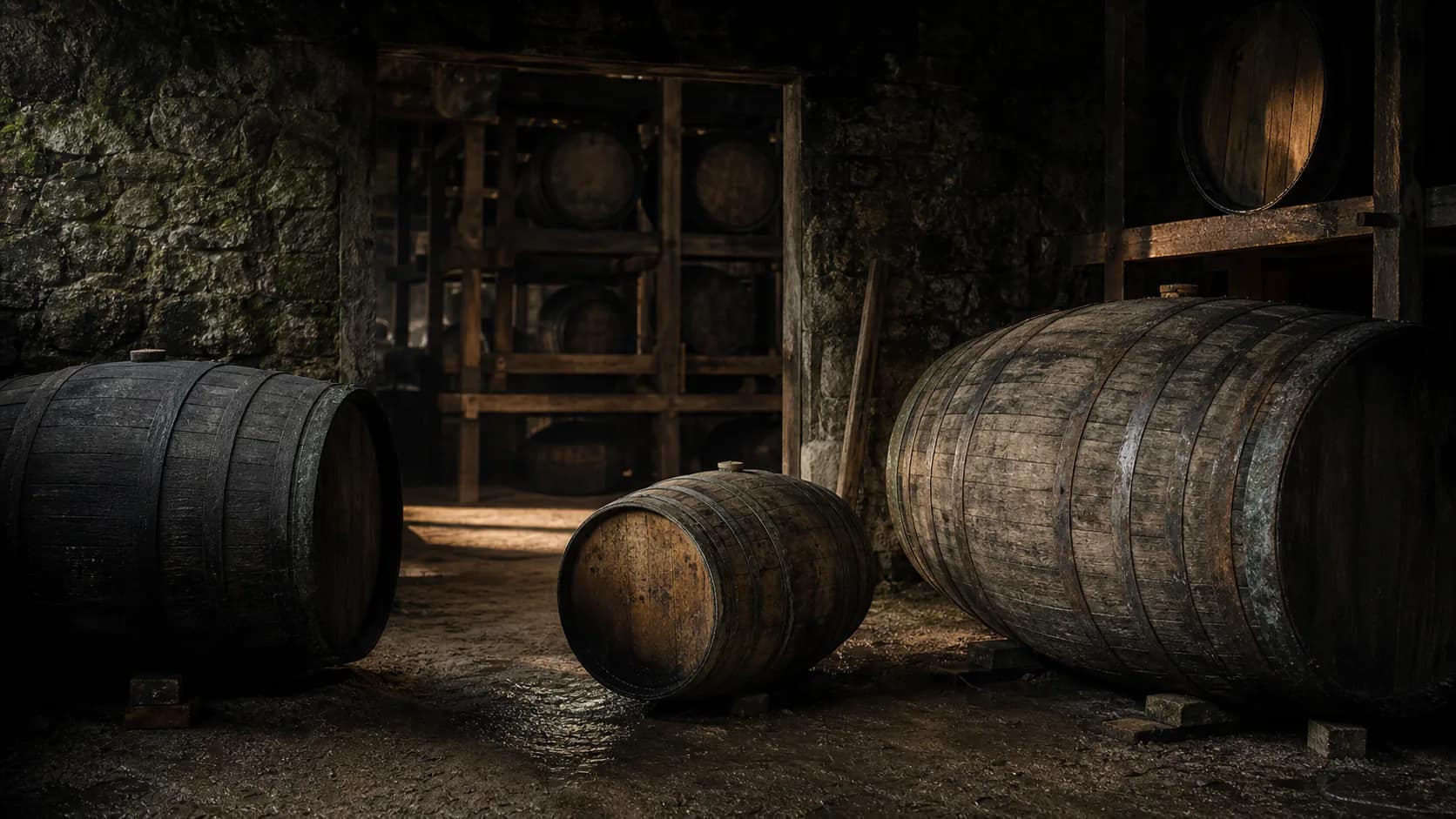
Cask size, oak condition, previous fill, stave tightness and warehouse position all matter. A smaller cask exposes more wood surface for each litre; a tired refill cask may exchange flavour differently from an active first-fill cask; a leak is not the Angel's Share at all, but a fault demanding attention.
Traditional dunnage warehouses, racked warehouses and palletised systems create different microclimates. Even neighbouring casks of the same spirit can finish with different volumes and strengths.
Economics
Age is paid for in disappearing liquid.
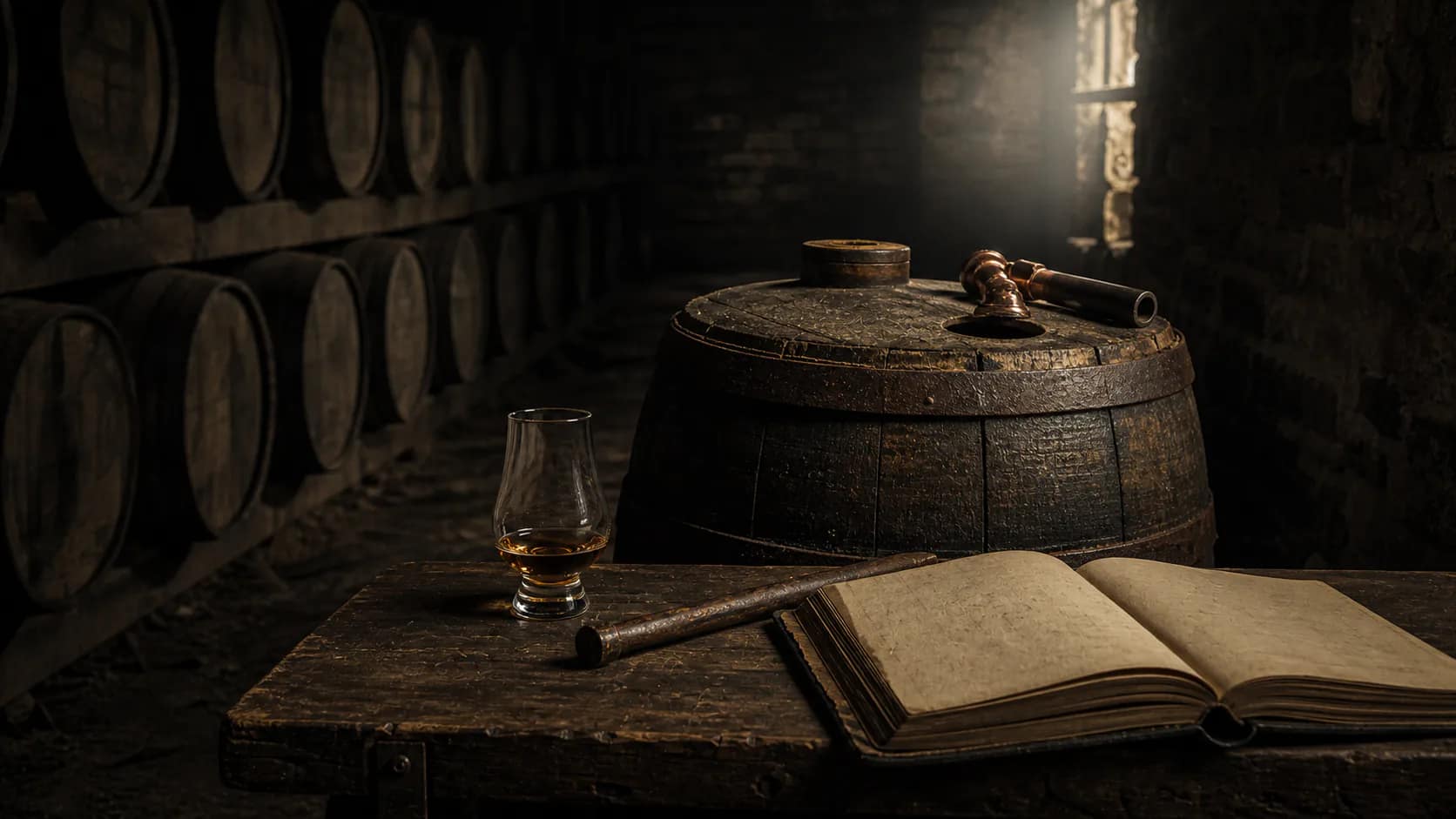
Older whisky costs more partly because the producer has financed spirit, wood, storage, insurance and monitoring for years while the saleable volume has steadily contracted.
A simple two-per-cent annual assumption compounds: it does not mean exactly twenty per cent disappears in ten years, and the real rate will change over time. The surviving whisky becomes scarcer, but age alone still does not guarantee better flavour.
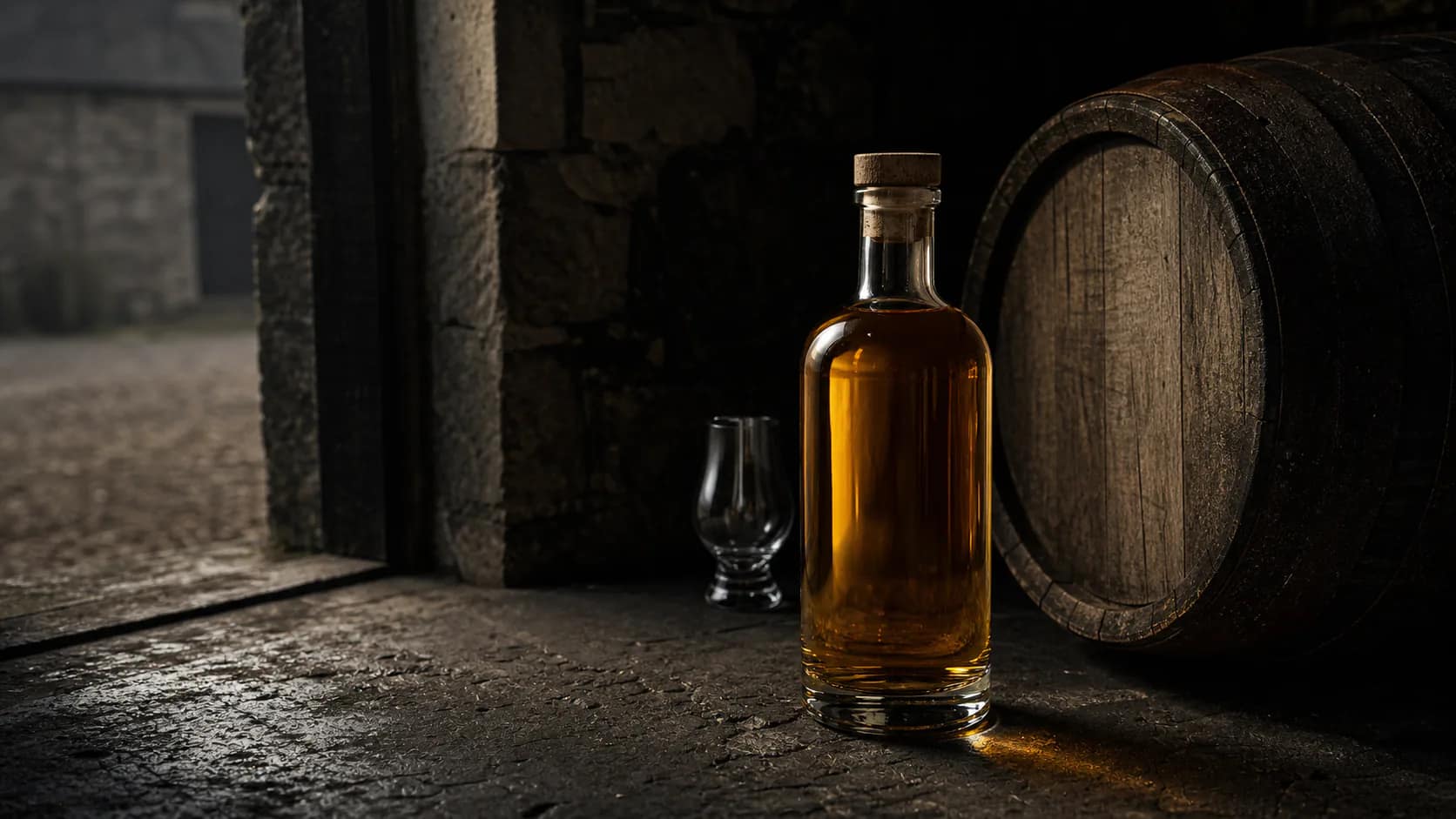
The bottle
Maturation ends when whisky leaves oak.
Once bottled, Scotch no longer matures as it did in the cask. A sound closure prevents the continuous oak-driven exchange that created the Angel's Share.
An unopened 12-year-old bottle kept for another decade remains a 12-year-old whisky. Its history continues, but its age statement does not.