Journal · 29/07/2026
Who is Distillery Master?
Part engineer, sensory guardian, teacher and public voice, the person entrusted with a distillery's character carries knowledge measured in decades rather than campaigns.
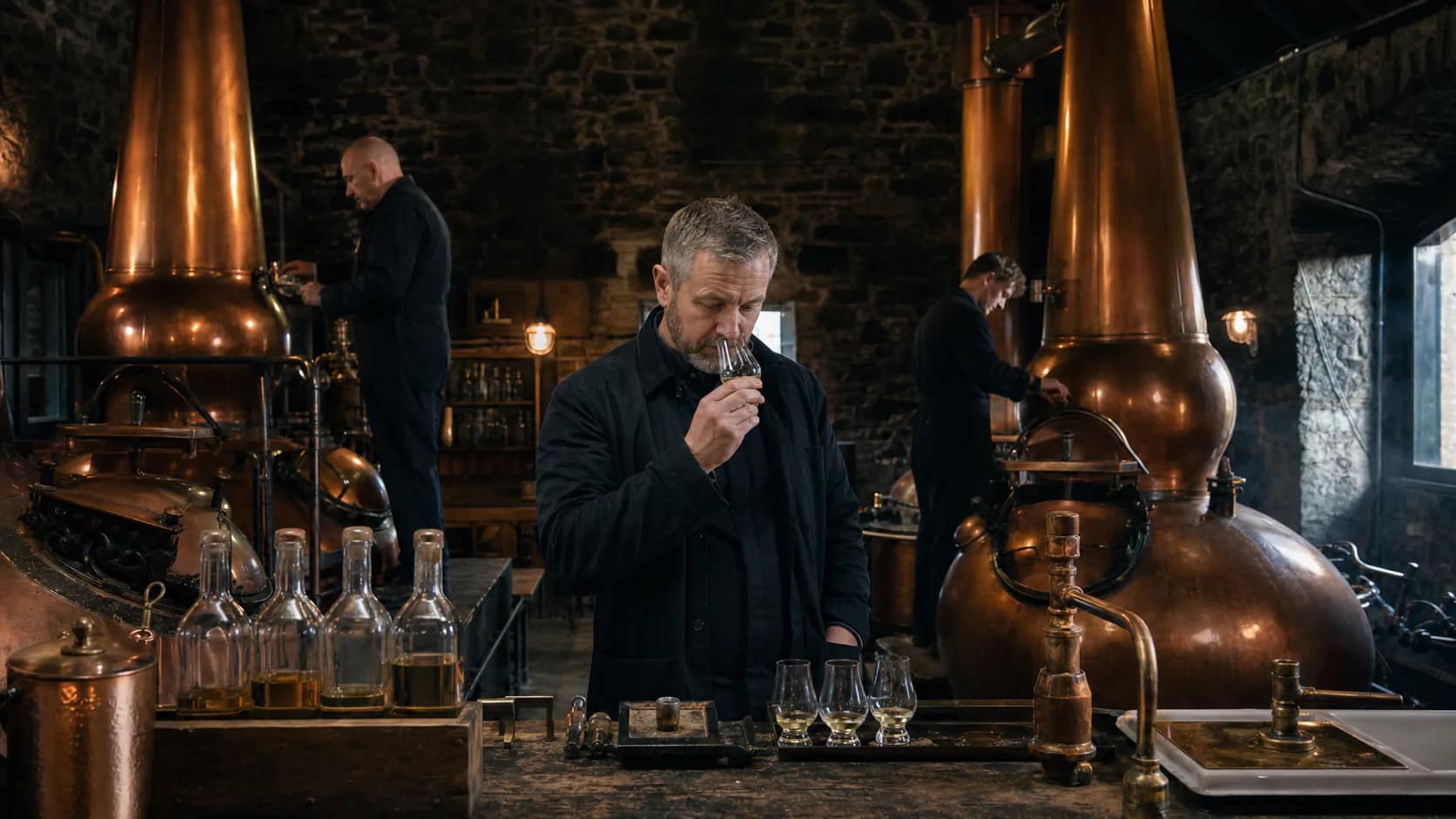
Central premise
The title sounds almost ceremonial: one master, one stillhouse, one lifetime of guarded secrets. The real position is more interesting. Scotch whisky does not use a single universal title for the person at the top of its making. Distillery Manager, Master Distiller, Malt Master, Master Blender and Whisky Maker can describe different responsibilities, and the boundaries vary from company to company.
What unites the strongest people in those roles is stewardship. They must understand a living industrial process closely enough to protect a house character, lead the people who reproduce it, improve the operation without erasing its identity, and explain that identity to the world.
The title
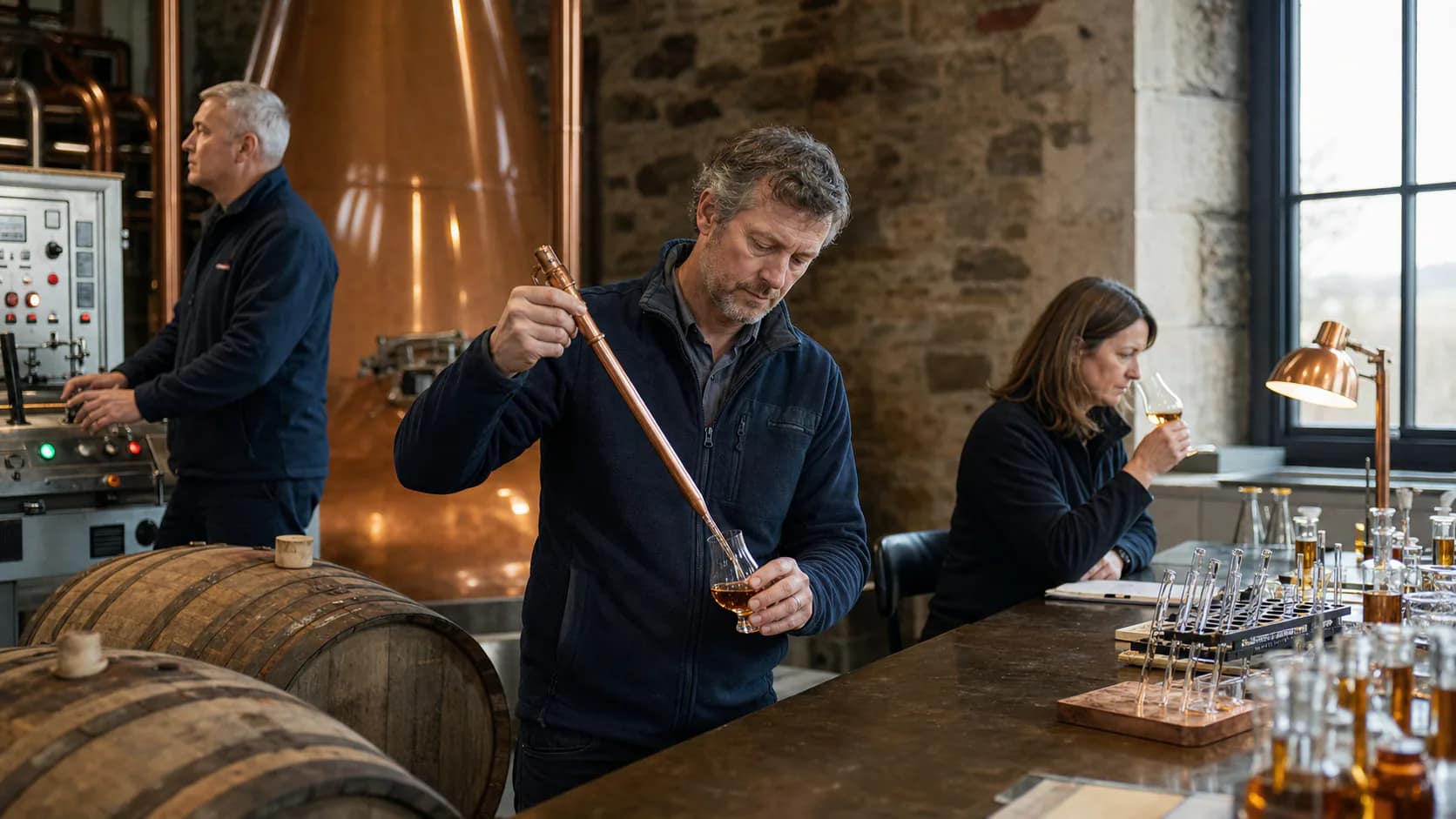
One craft, several kinds of master.
A Distillery Manager normally owns the day-to-day operation: raw materials, milling, mashing, fermentation, distillation, people, plant, safety, budgets, yield, energy, quality and compliance. A Master Distiller may carry similar authority, or may concentrate more heavily on spirit character and technical direction. The exact division is an employer's choice, not a universal legal grade.
Malt Masters, Master Blenders and Whisky Makers usually work further along the liquid's life—selecting stock, managing maturation, composing recipes and approving releases. They may influence new-make production, but should not automatically be described as the person running one distillery. The word master signals earned authority; the job description tells us where that authority begins.
The route
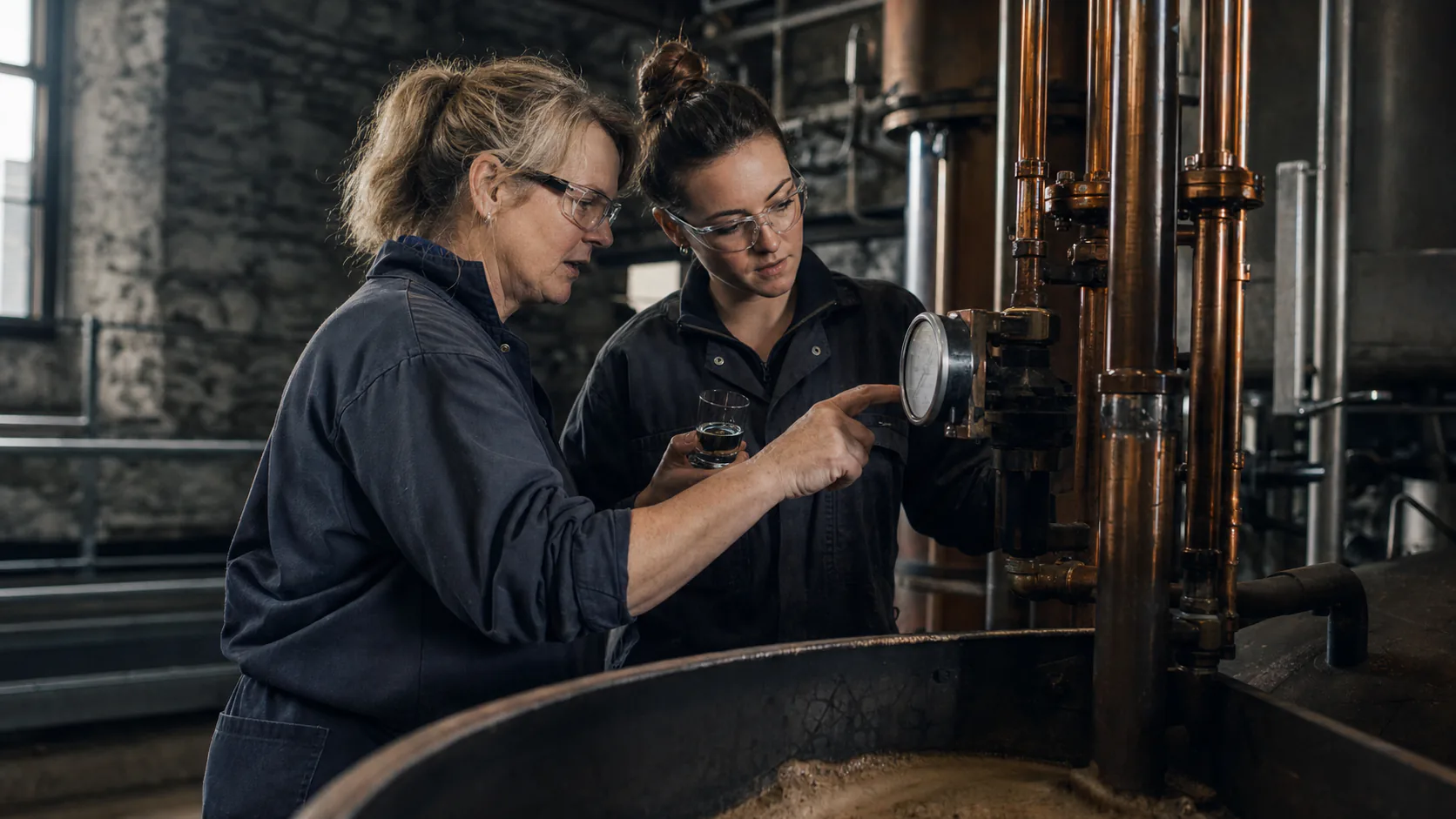
Knowledge begins on the floor, not on the label.
There is no single entrance. Some future managers begin as operators, stillmen, warehouse workers or tour guides and learn the plant one shift at a time. Others arrive through chemistry, engineering, food science or brewing and distilling degrees. The best careers join both forms of knowledge: why a process should work and the sensory, mechanical evidence of how this particular site behaves.
Formal study can cover cereal science, yeast, microbiology, process engineering, distillation, maturation, analytical chemistry, safety and management. Professional routes such as the Institute of Brewing and Distilling qualifications deepen that theory. Yet advancement still depends on years of decisions made beside mash tuns, washbacks and spirit safes, usually under experienced colleagues who teach what no diagram can fully preserve.
The liquid
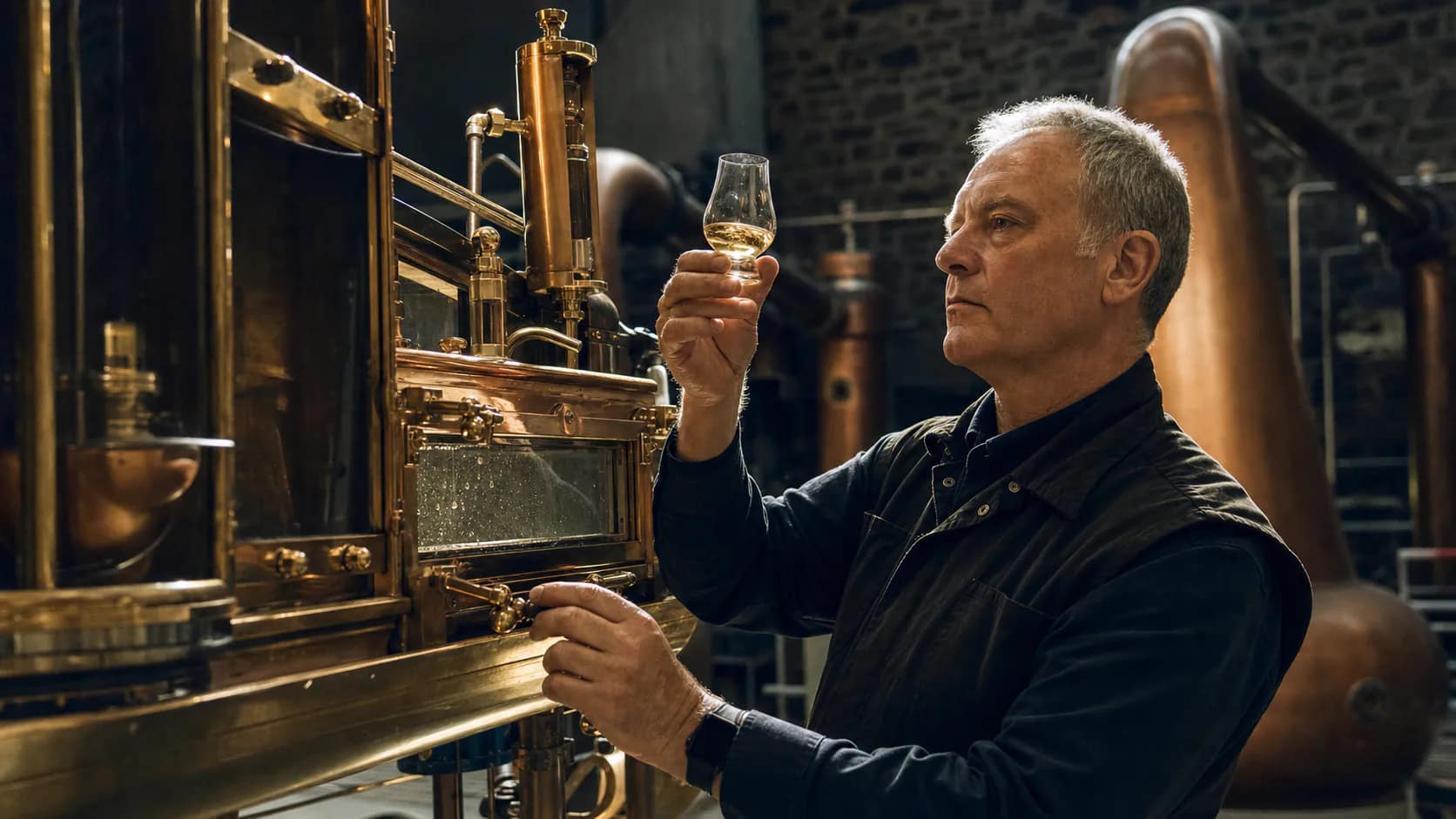
The first duty is to guard the make.
Barley, yeast, water and weather vary; a distillery's identity must not wander with them. The senior maker watches extraction, fermentation behaviour, still charge, heat, reflux and the cut points between foreshots, the heart of the run and feints. Instruments reveal trends, but repeated nosing and tasting connect those numbers to the spirit that will emerge years later.
Consistency is not blind repetition. Equipment ages, production targets change and sustainability demands better use of water and energy. The master's judgement lies in knowing which variables may move and which details define the house character. A small decision in the stillhouse can echo through a cask for decades.
The knowledge
Sacred knowledge survives by being shared.
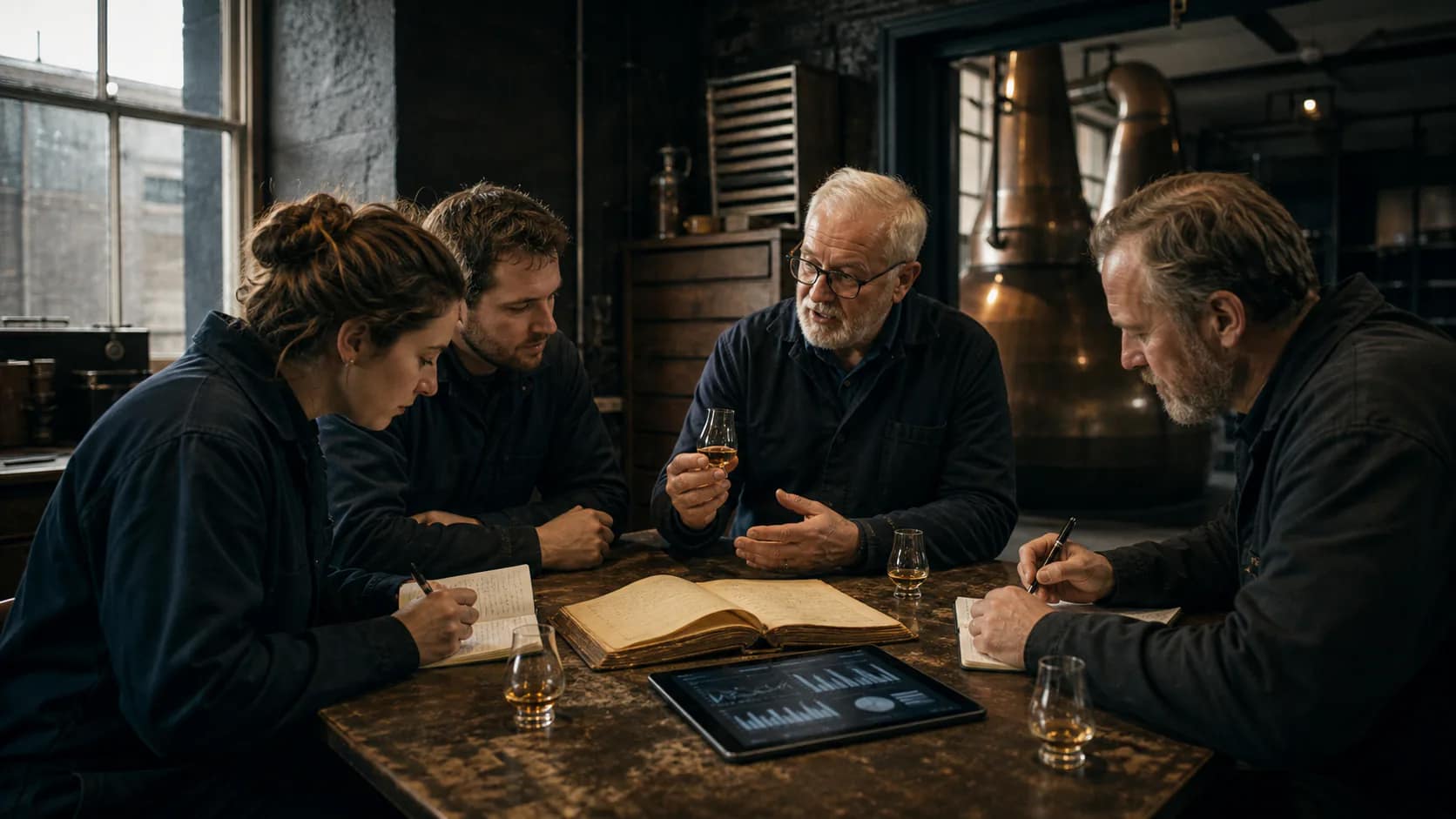
Whisky culture likes the image of one keeper holding every secret. In practice, the knowledge is distributed across operators, engineers, laboratory teams, warehouse staff, coopers, blenders and written process records. The master's significance is not that nobody else understands the work, but that someone can connect these disciplines and recognise when a small local change threatens the whole.
That makes teaching part of production. Senior makers build procedures, coach successors, compare samples and preserve the reasons behind a method—not merely its settings. Laphroaig's Barry MacAffer, for example, progressed from malt floors and warehouses to Assistant Manager, spent five years as deputy to John Campbell, and then became Distillery Manager. Succession of that kind turns experience into institutional memory.
The ambassador
The private expert becomes the public voice.
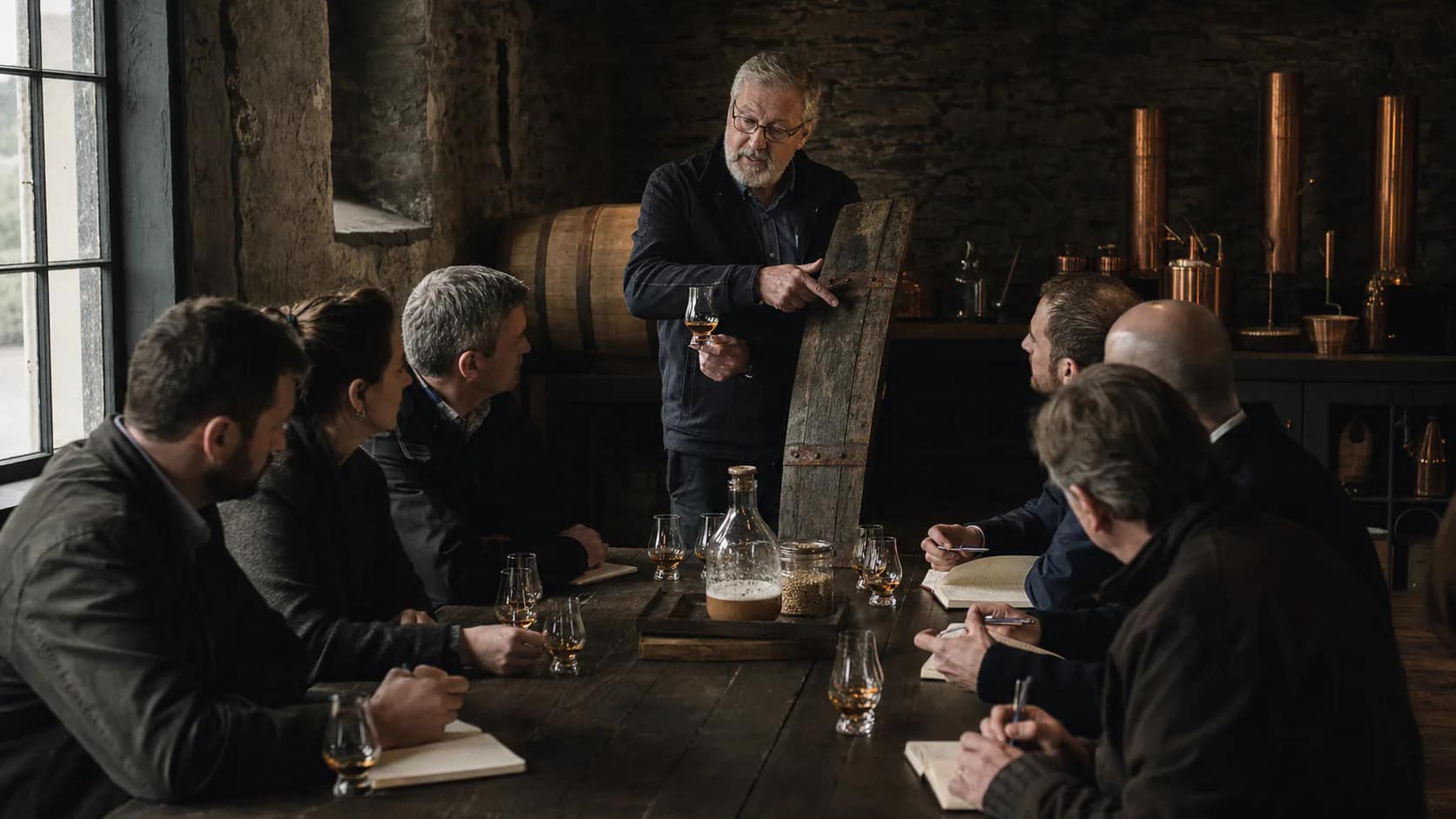
A senior whisky maker increasingly stands before visitors, journalists, distributors and collectors. The Scotch Whisky Association includes public events, customer relationships and brand promotion among a Distillery Manager's responsibilities; the equivalent maturation roles are often the human face of a release. Technical credibility makes the story believable because the speaker can connect flavour to an actual decision.
This is more than marketing theatre. A good ambassador translates complicated production without turning it into folklore, acknowledges the team behind the whisky, and protects trust when experimentation or change needs explanation. The same person may spend the morning reviewing yield and the evening describing fermentation to an audience an ocean away.
The lifetime
A career measured in decades.
Whisky rewards long memory because consequences arrive slowly. David Stewart joined William Grant & Sons in 1962 and became the Scotch industry's longest-serving Malt Master, nosing hundreds of thousands of samples and helping establish cask finishing as a modern practice. Glenmorangie describes Dr Bill Lumsden's whisky-creation career there in terms of three decades. At Laphroaig, John Campbell led for sixteen years after learning the distillery from within.
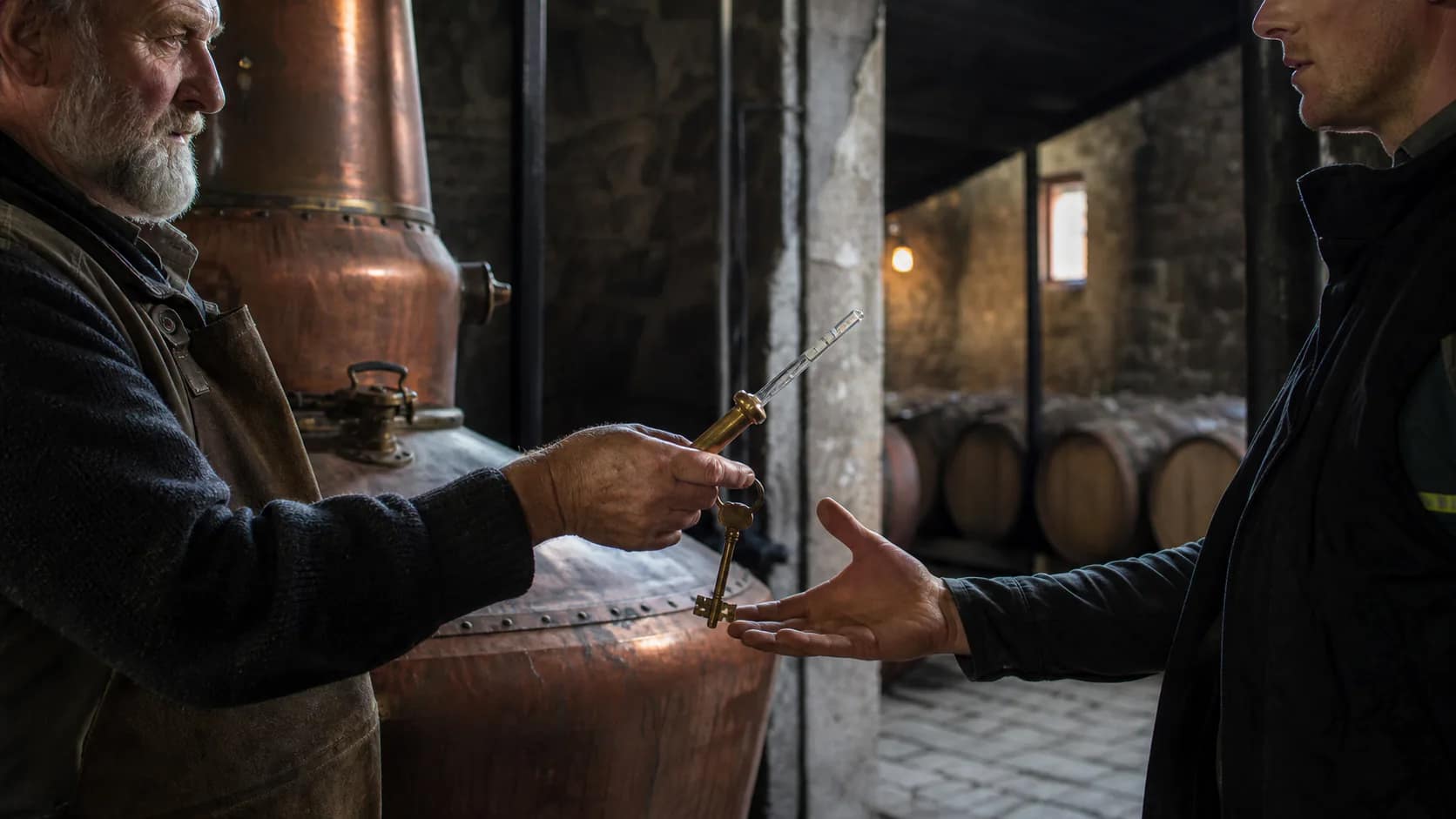
Not every master stays for life, and longevity alone is not proof of wisdom. But long service lets a maker taste decisions first imagined ten, twenty or thirty years earlier, then pass that knowledge forward. The true measure of the role is therefore succession: the spirit remains recognisably itself after the master has handed over the keys, the hydrometer and the responsibility.